
Rotator Cuff Related Shoulder Pain in Weightlifting
What Even Is the Rotator Cuff?
You’ve probably heard the term before, especially if you lift weights or play sports — or maybe you’ve heard rotator cup, rotor cuff, rotary cup, or some other common mispronunciation — but what actually is it?
The rotator cuff is a group of four small muscles in your shoulder:
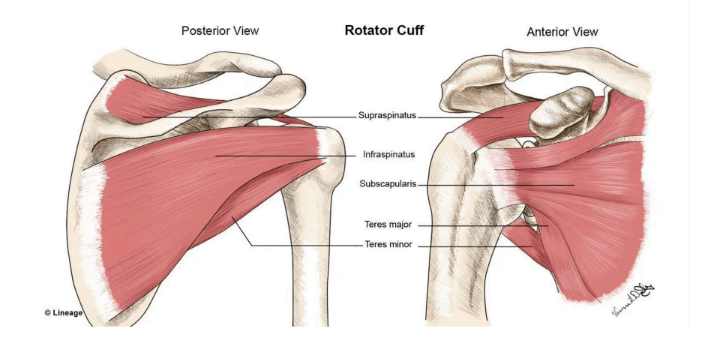
Supraspinatus
Infraspinatus
Subscpulairs (aka sub scap)
Teres Minor
Together, these muscles help keep your shoulder stable and allow it to move smoothly. They control rotation (turning your arm in and out) and, more importantly, help keep the ball of your shoulder joint centered in the socket—especially during overhead movements.
If you lift weights, your rotator cuff is working hard during exercises like:
Bench press
Overhead press
Snatches & jerks
Bottom line: a strong rotator cuff = a healthier, more reliable shoulder.
What is Rotator Cuff-Related Shoulder Pain?*
Rotator cuff related shoulder pain is a broad term for irritation of the rotator cuff tendons.
It usually shows up as:
Pain in the front or side of the shoulder
Pain when reaching overhead
Discomfort when reaching behind your back
Night pain, especially when lying on that shoulder
If you’re a lifter, you might notice it most:
At the bottom of a bench press
During overhead lifts
Why Does it Happen?
Most of the time, it comes down to overload.
In simple terms: Your shoulder is being asked to do more than it’s prepared for.
This can happen when you:
Suddenly increase weight
Add more training days
Increase total volume too quickly
Don’t recover enough between sessions
What Should You Do About It?
The good news: this is very manageable with the right approach.
1. Start Building Strength (Smartly)
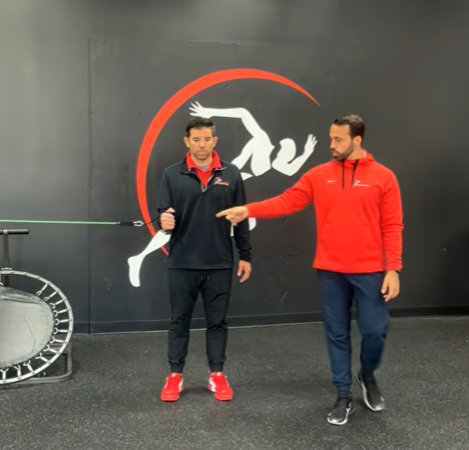
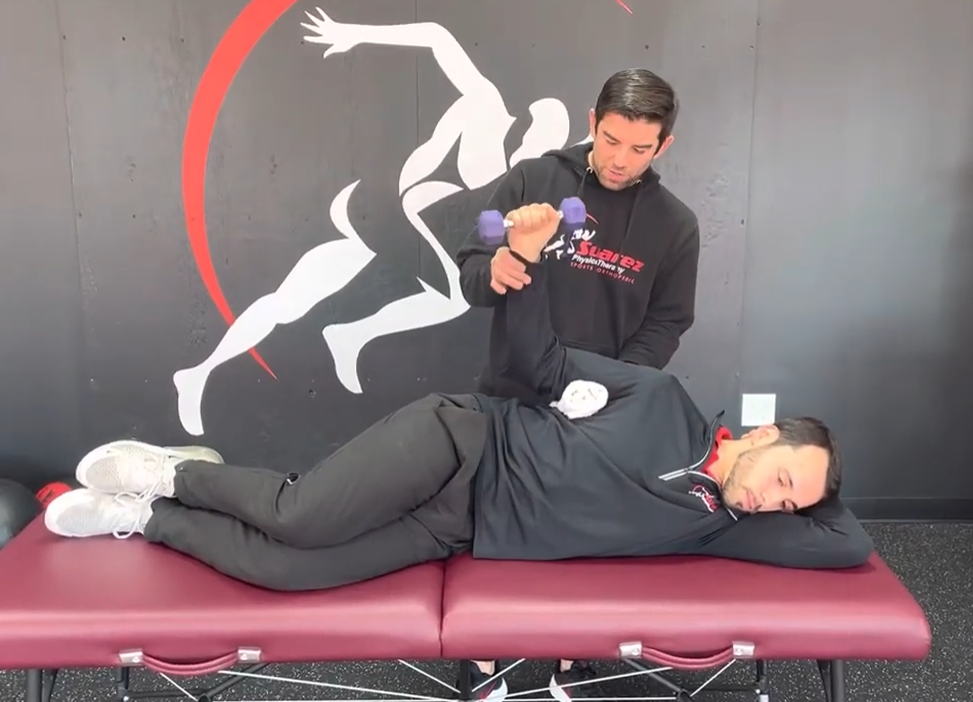
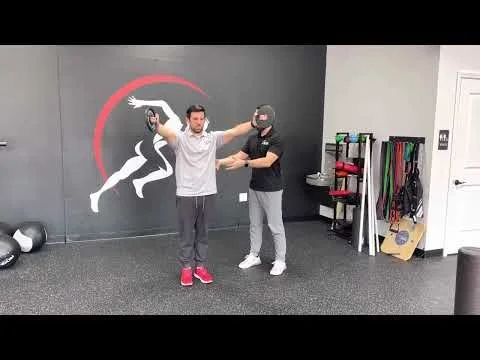
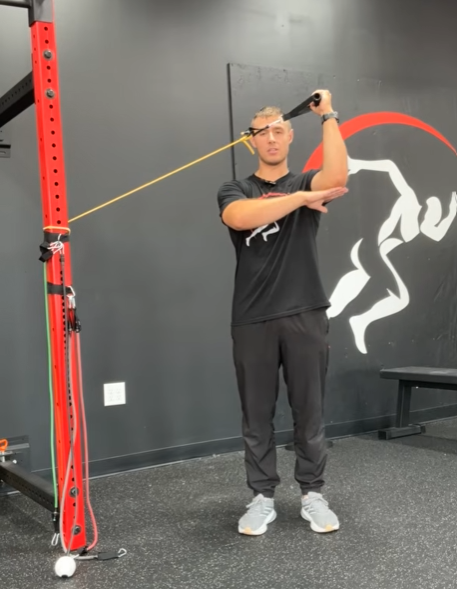
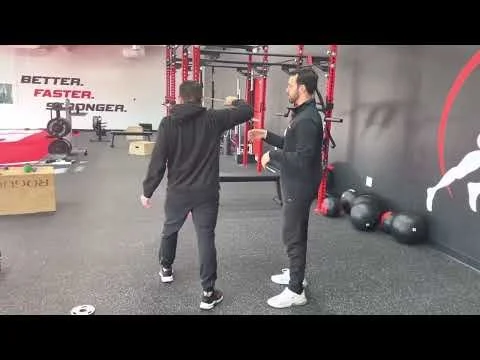
Begin with rotator cuff–specific exercises to rebuild strength.
1. If overhead movements hurt → start below shoulder height
2. Progress gradually toward overhead work as symptoms improve
2. Use Pain as a Guide (Not a Stop Sign)
A little discomfort is okay.
Aim for 2–3/10 pain during exercise
Pain should not linger or worsen the next day
If everything feels irritated:
Start with isometric exercises (holding positions without moving)
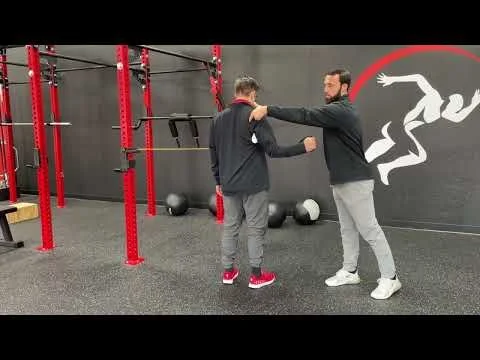
3. Don’t Forget Shoulder Blade Strength
Your shoulder blade (scapula) plays a huge role in shoulder health.
Strengthening these muscles helps:
Improve mechanics
Reduce strain on the rotator cuff
These exercises also work great as a warm-up before lifting.
Beginner Exercises:
Advanced Exercises:
Can I Keep Lifting with Shoulder Pain? Yes—With the Right Adjustments
Shoulder pain doesn’t automatically mean you have to stop lifting altogether.
The goal is to make adjustments while avoiding completely limiting provocative activities. That means respecting your symptoms, modifying your training, and gradually rebuilding strength.
If you’re dealing with shoulder discomfort but want to keep training, here are a few practical strategies to help you do so safely:
1. Turn Down the Intensity
Sometimes, a small change can make a big difference.
Start by reducing the amount of weight you’re lifting. Lighter loads can help calm irritated tissues while still allowing you to move and build strength.
Another helpful tip: avoid pushing every set to failure. Instead, try stopping about 4–5 reps before failure.
2. Adjust Your Training Frequency
More isn’t always better—especially when you’re in pain.
If you’re currently bench pressing or doing overhead lifts 3–4 times per week, try scaling back to once per week and monitor how your shoulder responds. Giving your body more time to recover can significantly reduce symptoms.
3. Modify the Movement
You don’t always have to eliminate an exercise—you may just need to tweak it.
Simple adjustments like changing your arm angle, reducing your range of motion, or switching from a barbell to dumbbells can make exercises much more tolerable.
The key is to find a variation that feels good and stick with it consistently for a few weeks.
You can try some of these modifications if you’re experiencing rotator cuff based shoulder pain during your training.
Overhead Press modification:
Landmine Press: Great alternative to a barbell overhead press. The landmine press allows you to work at an angle and avoids fully overhead positions that are often intolerable. Great way to continue training a shoulder press while respecting symptoms.
Bench Press Modifications
Floor Chest Press: The floor press reduces the overall ROM your shoulder goes through during the lift. It eliminates the bottom portion of the bench press that is often irritable in those dealing with shoulder pain.
Dumbbell Chest Press: Barbells keep your arms in a fixed position throughout the entire lift making it difficult to accommodate for painful positions. Using dumbbells allows you to alter your arm angle and find a pressing position that is more comfortable.
Citations
* Lewis J, McCreesh K, Roy JS, Ginn K. Rotator Cuff Tendinopathy: Navigating the Diagnosis-Management Conundrum. J Orthop Sports Phys Ther.
2015;45(11):923-937. doi:10.2519/jospt.2015.5941
** Desmeules F, Roy JS, Lafrance S, et al. Rotator Cuff Tendinopathy Diagnosis, Nonsurgical Medical Care, and Rehabilitation: A Clinical Practice Guideline. J Orthop Sports Phys Ther. 2025;55(4):235-274. doi:10.2519/jospt.2025.1318